Nothing typed in twice
The most expensive software problem in most small businesses isn't a missing tool. It's the same information being typed into two of them.
If someone on your team retypes the same information into a second tool, that’s not a task. That’s a leak.
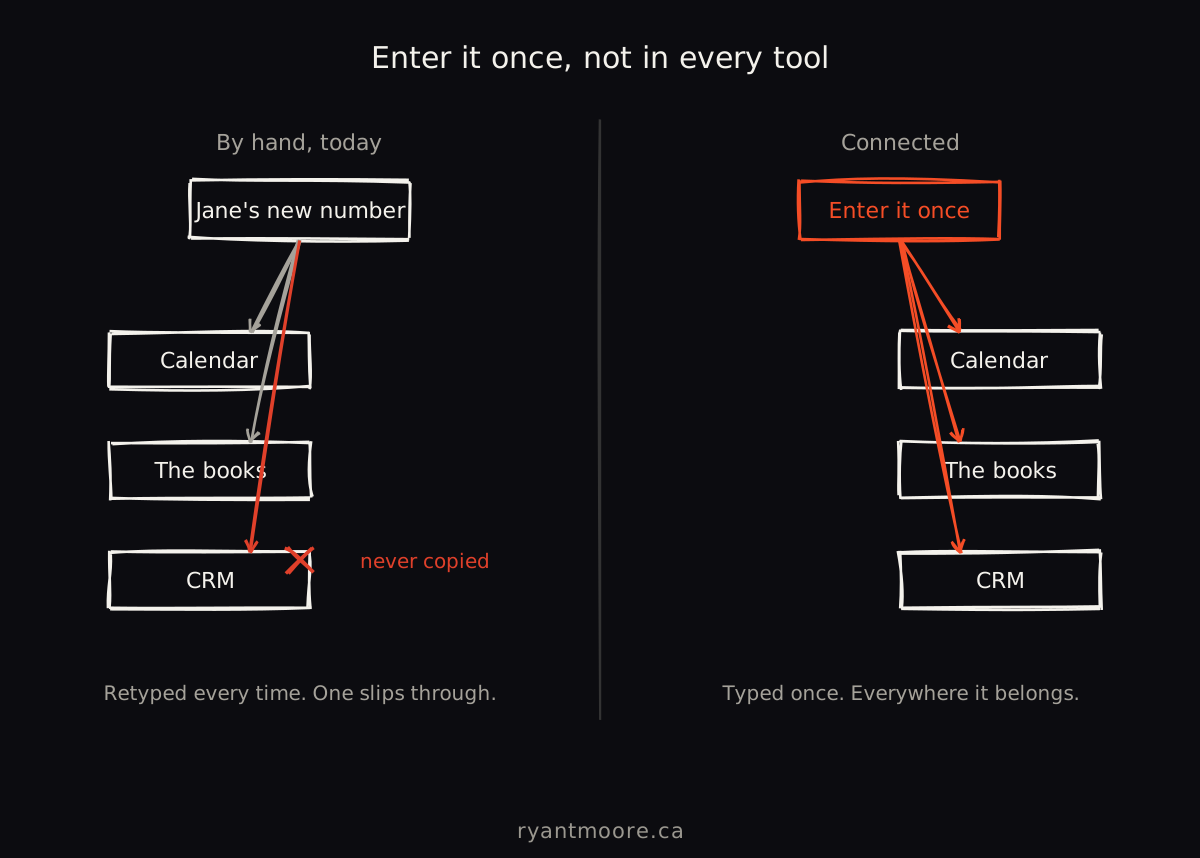
Most businesses I talk to don’t have a software problem. They have plenty of software: a booking tool, an accounting tool, a calendar, a CRM, a phone system. Each one works fine on its own.
The problem is the space between them.
What the leak looks like
It rarely looks dramatic. It looks like this:
- A job gets booked in one system, then someone copies it into the calendar by hand.
- An invoice gets written in the field, then typed into the books that evening.
- A customer’s new phone number gets updated in one place, and stays wrong in three others.
Each copy takes a minute or two. Nobody complains, because it’s always been done that way. But minutes turn into hours, and the retyping is the good outcome. The bad outcome is the copy that doesn’t happen: the booking that never reaches the calendar, the invoice that never reaches the books, the follow-up that never goes out. Those aren’t minutes. Those are missed jobs and unpaid work.
Why it happens
Software companies build tools, not connections. Your booking tool’s job is bookings. Your accounting tool’s job is the books. Most tool makers are not paid to make sure two different products agree, so out of the box they often don’t.
That gap is left for someone in your business to fill. Usually with copy-and-paste.
What “connected” actually means
When two tools are properly connected, routine information moves on its own the moment it exists:
- A booking lands, and it’s already in your calendar.
- A job is marked done, and the invoice is already in your books.
- A customer updates their details once, and every system agrees.
Almost no one touches it, and the exceptions get surfaced for a person to check. That’s the point. The connection isn’t a feature you use. It’s a leak that stopped existing.
Where to start
You don’t need to connect everything at once. Start with one question: what does someone in your business type in twice?
Ask the person who does the admin, not the person who bought the software. They’ll answer immediately, because it’s the most annoying part of their day. That answer is almost always the highest-value connection you can build, and it’s usually a much smaller project than people expect.
That’s the work I do: I find the leaks, and I wire them shut.