The job that quietly loses money
A contractor was sure he had a great year. When the books were finally reconciled, most of the profit he thought he had made turned out to have never been there.
The most expensive job in a lot of small businesses is the one nobody’s doing: keeping the numbers current. It never feels urgent, so it slides, and the cost stays invisible until it’s huge.
On the Profitable Tradie podcast there’s a story about an owner who was sure he’d had a strong year. Then the books got properly reconciled, and his real profit turned out to be a small fraction of what he thought. A whole year had gone by with books nobody kept current, and the gap between the number in his head and the number on the page was enormous.
I want to be careful with the figures, because this is where these stories get slippery. “I made three quarters of a million” usually means money that came in, not money kept. Revenue, gross profit, and what actually lands in your pocket are three different numbers, and blurring them is exactly how an owner ends up gut-punched at year-end. He did good work all year. What he didn’t do was keep the scoreboard current enough to catch the leak while it was small.
Why the back office slides
Bookkeeping has a nasty quality: skipping it once costs you nothing you can feel. The roof still goes on. The customer still pays. The day still ends. So it slides behind the work that feels real, and it keeps sliding, until a year of small gaps adds up to a number that can swallow your profit.
What software can and can’t take off your plate
Here’s the honest version, because “automate your books” oversells it. Software is great at the routine matches: pairing a payment to the right invoice, flagging what’s overdue, totalling direct costs. It is not a bookkeeper. The judgment calls, how to categorize an odd expense, how to handle an exception, still need a person.
So the right shape isn’t “let the computer do the books.” It’s: let the computer do the routine matching and put the exceptions in front of a human. That keeps the scoreboard current without pretending judgment went away.
The one number to surface every week
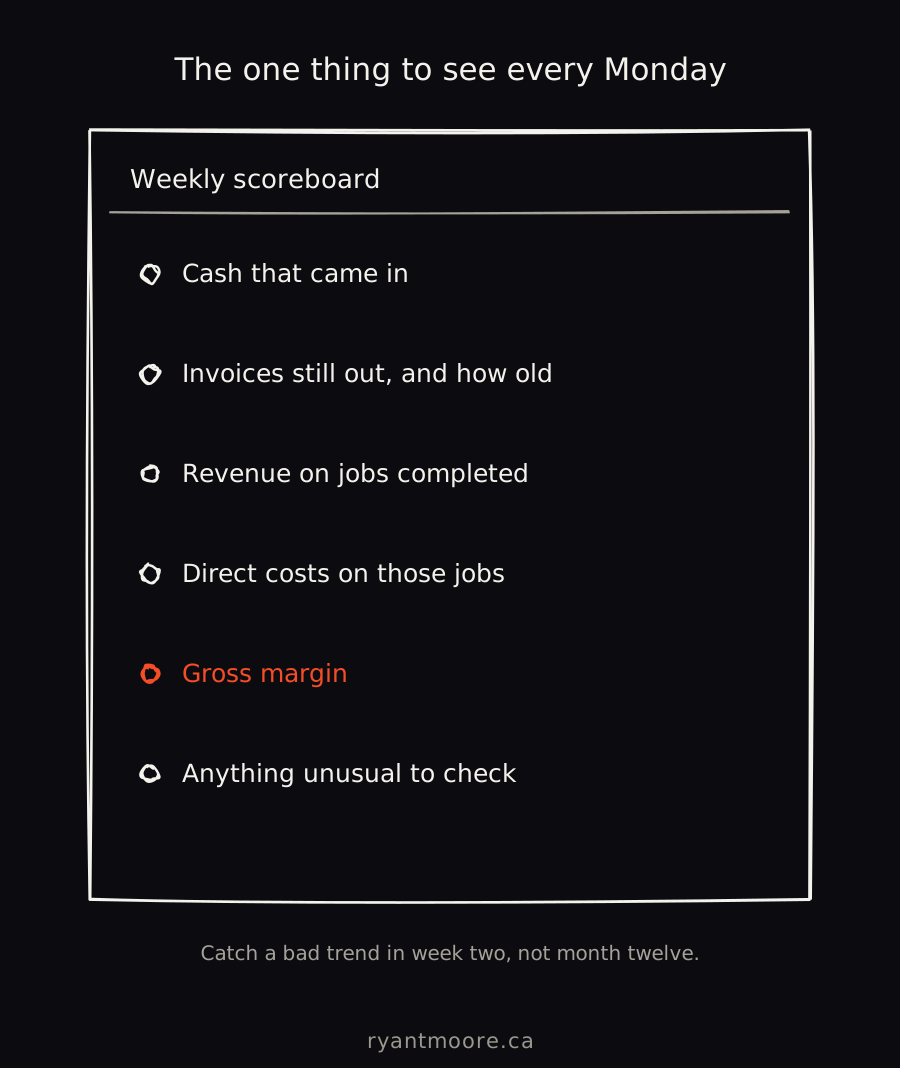
The deeper problem wasn’t the leak. It was that he didn’t see it for a year. The fix is to make the scoreboard show up on its own, every week, whether or not anyone remembers to build it. Something as plain as:
- Cash that came in this week
- Invoices still outstanding, and how old they are
- Revenue on the jobs you actually finished
- Direct costs on those jobs
- Rough gross margin from completed-job revenue and direct costs
- Anything unmatched or weird that needs a human’s eye
Keep the cash line and the margin line separate in your head: money in this week isn’t the same as profit on this week’s work, because payments and costs land in different weeks. But even a rough version of both, in front of you every Monday, means a bad trend is something you catch in week two, not something you find twelve months later when the year’s already gone.
The move
Pick the one back-office job you’re furthest behind on. For most owners it’s the money side: matching payments, chasing invoices, or just knowing the real margin. Get the routine part running on its own, send the exceptions to you, and have a plain weekly snapshot land whether you ask for it or not.
The work was never the problem. The scoreboard around the work was, and the scoreboard is exactly the kind of thing you can hand off, as long as you keep the judgment calls for yourself.