Your notes are the AI’s memory
Everyone argues about which AI model is best. For getting real work out of one, the bigger lever is boring. It's how well your own information is organized for the AI to read.
Your AI isn’t dumb. It’s working blind. The letdown usually isn’t the model, it’s the junk drawer you handed it.
Your AI isn’t dumb. It’s working blind. Most of the letdown people feel with AI at work has nothing to do with the model. You hired a sharp assistant, handed it a junk drawer, and asked it to find the stapler. Then you blamed the assistant. A better model won’t fix that. The bottleneck isn’t brains, it’s what the thing can actually see about your business.
So pick a capable model, sure. But once it’s good enough, a smarter one stops being the lever. What it can find out about your business is.
Two people landed on this same point from opposite ends. Google’s Agent Development Kit added file-based skills with progressive disclosure: the agent reads a short description first, then loads the full instructions only when the task needs them. Dan Martell’s second-brain approach is the same idea in plain clothes: organize your own knowledge so an assistant can actually use it. One’s a dev framework, one’s a productivity guy on YouTube. Same lesson: for most business tasks, fixing what you feed the model beats chasing a newer one.
Why the mess is the real problem
Ask an AI about your business and it’s only as good as what it can see. If your pricing lives in one guy’s head, your process is scattered across old email threads, and your customer notes sit in three different tools, no model can give you a straight answer. It’ll guess, confidently, and you’ll call it dumb. It wasn’t dumb. You never wrote anything down where it could read it.
Organized notes aren’t automatic memory
One catch before the habits, because people trip on it. Tidy notes don’t become AI memory by magic. The assistant still needs a safe way to reach them, a reliable way to find the right one, and a way to tell this year’s pricing from last year’s. Organizing is what makes that connection worth having once it exists. Necessary, not sufficient.
What good looks like
No special software required. You need your important stuff written down, current, and easy to find. A few habits do most of the work:
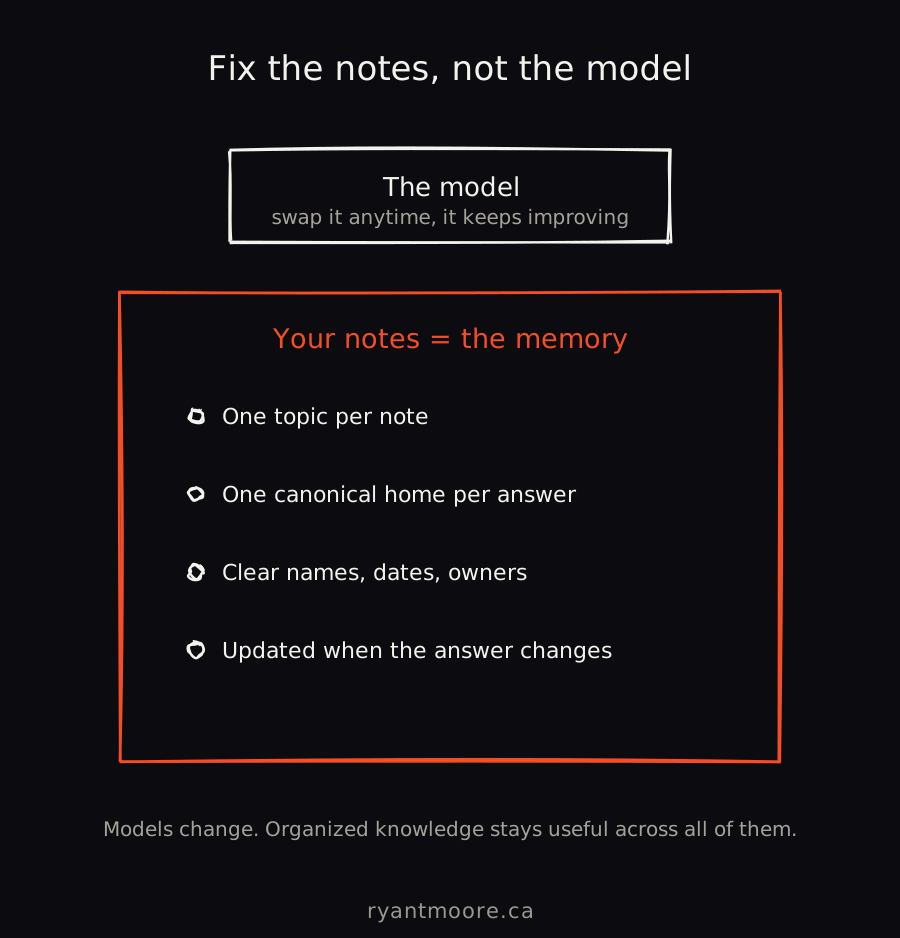
- One topic per note. Pricing here, your process there. Not one giant doc.
- One home for each answer, so nobody’s guessing which copy is right.
- Clear names and dates. “2026 pricing, updated March” beats “final-final-v3.”
- Fix the note when the answer changes. Stale pricing is worse than none.
- Give the assistant only what it needs, and nothing sensitive it doesn’t.
Dull as dishwater. Also some of the highest-leverage AI work a small business can do.
Fix the notes first
Do this and any assistant you point at your business gets better overnight, because it can finally find the answer. And you stop being the bottleneck, because the answer isn’t locked in your head anymore.
Models keep changing on their own, no effort from you. Organized, current notes stay useful across all of them. That’s where your time actually pays off. Fix the notes first.