Be the answer the AI gives
Search is becoming answers, and the new question is whether the AI names your business at all. The work to get named is mostly the boring stuff you already know.
AI answers change how results look, not the groundwork underneath. If a machine can find you, understand what you do, and see that other people vouch for you, you can be the answer. That part has not changed.
Open ChatGPT and ask it for the best plumber in your city. You’ll get a short answer naming two or three businesses, not a list of ten links. The question used to be “where do I rank on Google.” Now it’s whether the answer names you at all. If your business isn’t one of those names, for that search you don’t exist.
Ranking didn’t stop mattering. Google’s AI features are built on the same Search index and quality systems, and other answer engines have their own retrieval and ranking on top of that.
A lot of people are selling this as some brand-new game you have to relearn. I don’t buy it. It’s still search underneath, with an answer laid over the top, and most of what gets your name into that answer is stuff you’ve heard a hundred times.
The same game, new front end
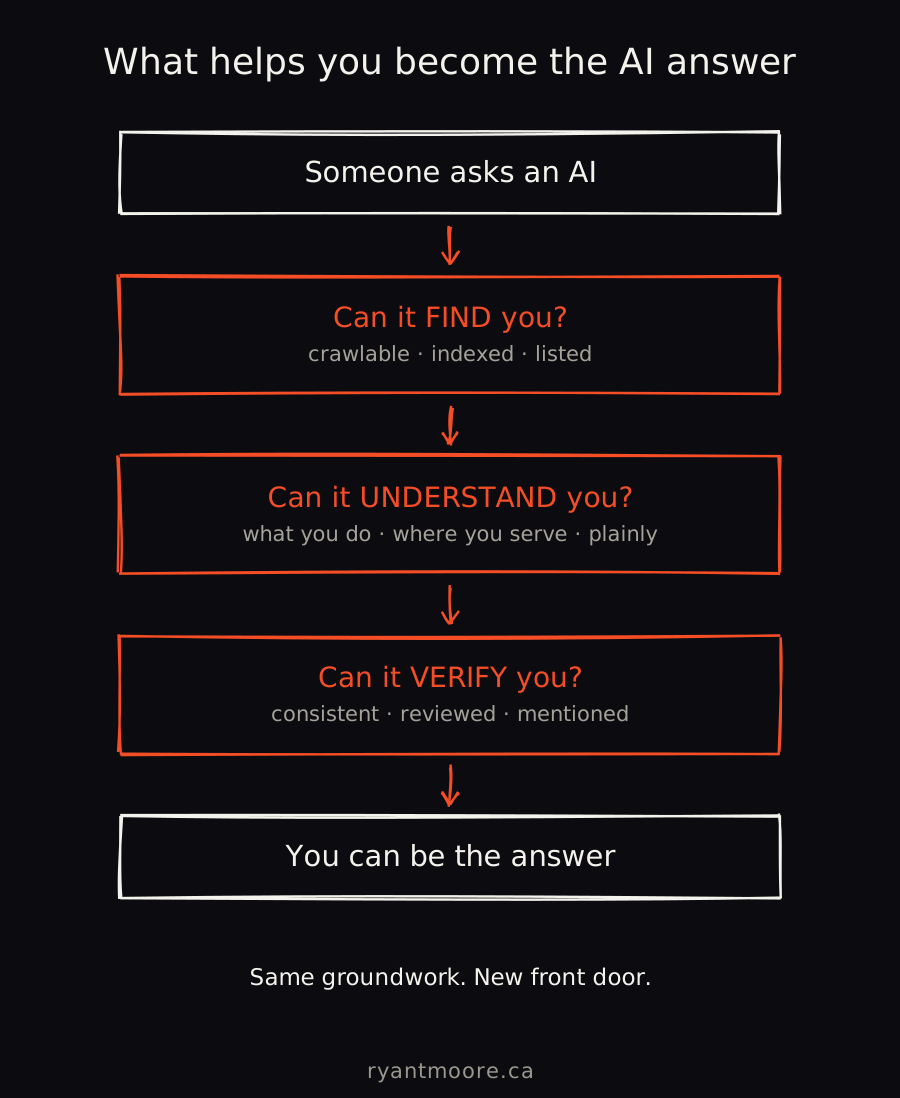
Google says it directly: its AI search features use the same core ranking and quality systems as regular Search, and there is no special AI optimization to chase. OpenAI says roughly the same about ChatGPT Search: it weighs relevance and reliability, it has to be able to crawl your site to include you, and it promises nobody a spot. No tricks, no secret markup. The groundwork is still the groundwork, and it comes down to three plain questions.
Can it find you?
If a system cannot reach your pages, it cannot mention you. Let Google’s and OpenAI’s crawlers in (Googlebot, OAI-SearchBot), keep your important pages indexable, and keep your Google Business Profile and other real listings current.
Can it understand you?
Once it can read you, it has to know what you actually do. Say it in plain words: “emergency furnace repair in Halifax,” not “solutions for your comfort needs.” Answer the questions customers actually ask, in text on your own site, not buried in an image or a video.
Can it verify you?
Last, it wants a reason to trust it has the right business. That mostly comes down to being consistent. If your name, services, location, and phone number say different things on different sites, you are easy to skip. Reviews and real mentions help too, since the machine leans on what other people say about you, not just what you say about yourself. There is no trick to it. You are just handing it solid, boring evidence that you are the right answer.
Reddit is doing a lot of the answering
This next one surprises people. Reddit has become one of the most-cited sources in AI answers. From late 2024 into 2025 it was the most-cited domain in Google’s AI Overviews and in Perplexity, and second in ChatGPT (Columbia Journalism Review). That is a recent snapshot, not a permanent ranking. Google reportedly pays it around sixty million dollars a year to get at those conversations (Tom’s Guide).
So when someone asks an AI “who is good at this near me,” Reddit can shape the answer, especially for recommendation and experience questions. How much depends on the platform, the topic, and where you are. You cannot fake your way in. Communities punish self-promotion and astroturfing backfires. The move is boring: be genuinely useful in the subreddit where your customers already are, and let the mentions happen on their own. And this is a right-now picture. Reporting says Reddit is getting ready to revisit its Google deal, so the platform details may move. The lesson under them will not.
The systems view, for the builders
One layer down. The old ranking layer is still there. AI search adds retrieval and synthesis on top: it finds supporting pages, then writes an answer across them. Your pages might get summarized or blended with other sources before a customer ever lands on them.
Two things follow. Measurement gets worse, because an answer with no click and no referrer breaks the rank-to-click-to-analytics loop, so you fall back to fuzzier signals like brand mentions and direct traffic. And a new way to lose shows up next to ranking low: the model can just say something wrong about you. You cannot fully control that. All you can do is be the clearest, most consistent source out there, so there is less to get wrong.
Start with the basics
None of this is full answer-engine optimization — that’s a deeper craft, and a post for another day. These are just the table stakes, the things that have to be right before any of the fancier work matters. Roughly in order:
- Make sure you can be found. Confirm your site isn’t blocking Googlebot or OAI-SearchBot, your key pages are indexable, and your Google Business Profile is claimed and current. If a machine can’t reach you, nothing else matters.
- Say plainly what you do and where. One clear line per service, in real text: “emergency furnace repair in Halifax,” not “comfort solutions.”
- Line up your facts everywhere. Same name, address, phone, and services across your site, your Profile, and every directory. Then chase a few honest reviews.
To see if it’s working, don’t wait for a dashboard. Once a month, open ChatGPT, Perplexity, and Google and ask what a customer would ask: “best [what you do] in [your city].” Note whether you’re named, and who is if you’re not. That five-minute check beats most tools, and it’s free.
One caveat: this matters most if you’re a business people actually ask an AI to recommend — local and service work especially. If nobody queries an assistant for what you sell, it matters less, though being findable never hurts.
The honest version
There is no guaranteed way into an AI answer. A good business can still get left out, and these systems still get things wrong. But the fundamentals are the ones that always worked: be reachable, describe your work clearly, keep your facts current, and give people real reasons to mention you.
Getting found used to mean climbing a list. Now the list sometimes shows up as an answer instead. The front door changed. The work behind it did not.