Buy the outcome, not the automation
The promise that something will save you time stopped meaning anything the day everything started saving you time. What you're actually buying is money that stops leaking, a business that holds steady on a bad day, and one less thing hanging over you.
Nobody wants automation. They want the follow-ups to stop slipping, the books to be right, and to quit lying awake over the thing that keeps getting missed. That’s what’s for sale. Shop for that.
“This’ll save you time” used to be enough. Not anymore. Every tool says it now, and when everyone says the same thing, it stops meaning anything. It was a weak promise to start with. Saved for what? You don’t want a vague hour back. You want a specific problem to quit happening.
What you’re actually buying
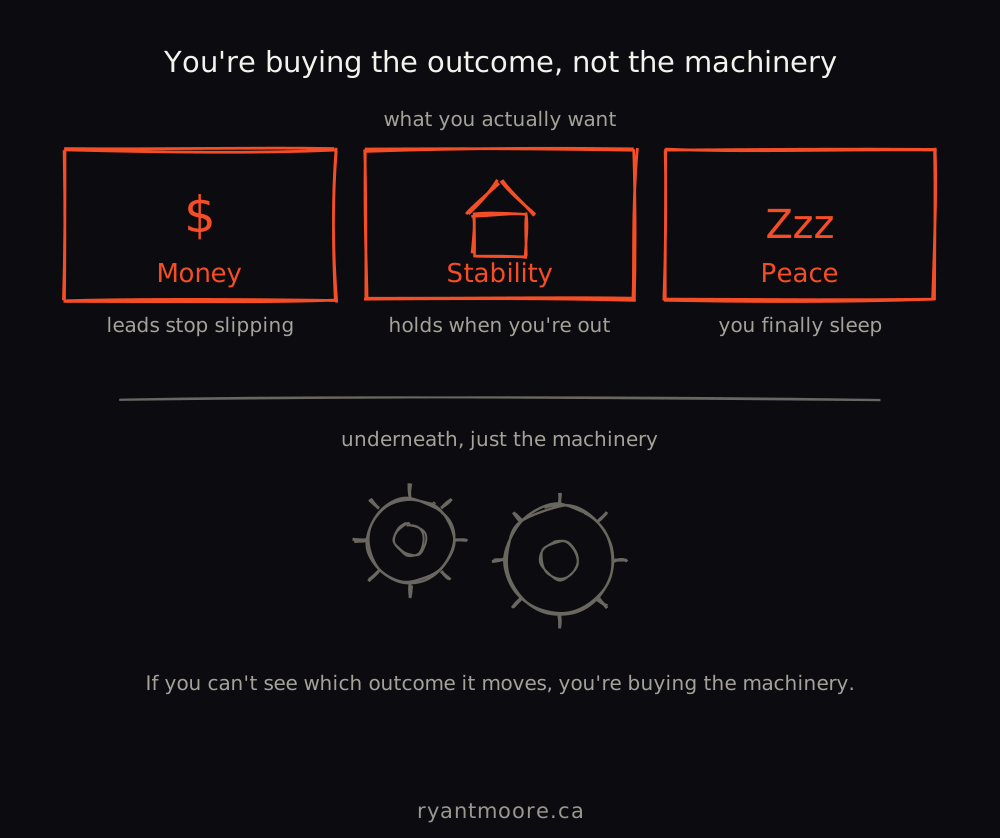
Every automation project I’ve seen is really about one of three things:
- Money. Leads that don’t slip, invoices that don’t sit, a margin you can actually see.
- Stability. The business runs the same on the day someone’s out sick as on a good week.
- Peace. You stop lying awake over the follow-up nobody sent or the number nobody checked.
None of those is “automation.” That’s the outcome, and it’s the thing you’re buying. So when you’re deciding whether to build or buy something, hold it against the three: which one does this move, and how much? “It automates your workflow” isn’t an answer. “Your follow-up stops falling through, so you quit losing jobs to slow replies” is.
Don’t lead with a feature list
There’s a trap on your side of the table too. It’s tempting to hand a builder a list of features and ask what it costs. Features matter eventually. They just shouldn’t lead. A feature list is a guess at the fix for a problem you haven’t named yet, and if you buy the guess, you can get every feature you asked for and still not fix what hurt.
The better conversation stays on the problem longer than feels comfortable. What’s it cost you when this goes wrong? How often? What’s it worth to make it stop? Get that clear and the right thing to build usually gets obvious. It’s often smaller and cheaper than the list you’d have bought.
Ask what happens when it breaks
One more, because it’s where cheap automation turns expensive. Anything you turn loose on your money, your customers, or your live systems needs clear limits and a human check where it counts. Ask whoever builds it: what can this touch, and what does it have to ask before doing? If the answer is “it just runs,” that’s not confidence, it’s a gap. The outcome you’re paying for includes not blowing up on a bad day.
Before you buy
Buy the result, not the machinery. Money that stops leaking. A business that holds steady. A night’s sleep. If you can’t say which one a project moves, and by how much, you’re being sold the automation instead of the outcome. And the automation was never the part you wanted.