The benchmark winner might be the wrong model for you
Every few weeks a new AI model tops the charts and the internet calls the last one obsolete. The leaderboard measures something real. It just doesn't measure whether the thing will do your job the same way every time.
A benchmark says a model aced someone else’s test. Fine. That’s not the same as knowing it’ll do your job, on your messy inputs, without going sideways on you. Only one of those pays your bills.
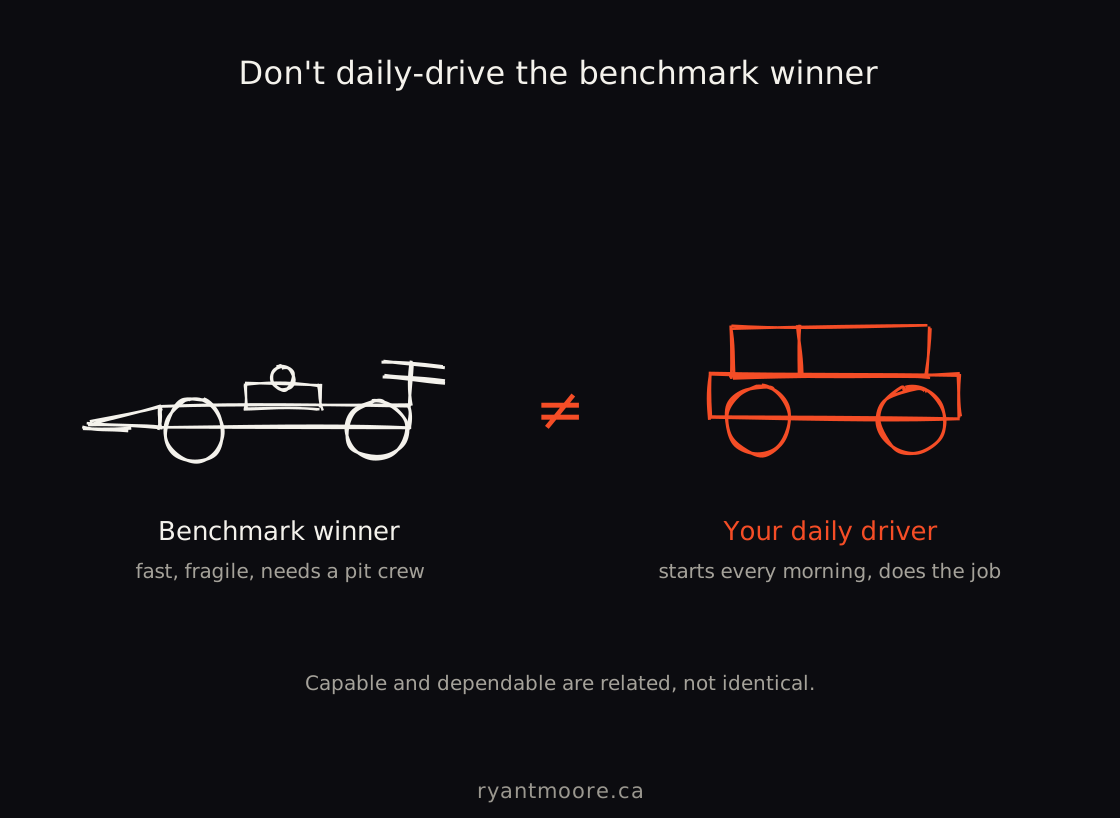
AI news has a rhythm now. New model drops, tops the leaderboard, everyone calls last week’s model obsolete, and seven days later something else wears the crown. Chase every crown and you’ll never get any actual work done.
The leaderboard isn’t useless. A model that scores well is probably sharp. What the score won’t tell you is whether it’s sharp at your job. And the people building with this stuff all day keep landing on the same thing: the model that wins the benchmark often isn’t the one that does a boring, repeated task the same way every time. Smart and dependable aren’t the same trait.
Test it on your own work
The only benchmark that matters for your business is your business. Before you trust a model with something real, run your actual task through it a few times and watch. Does it do the same thing each run, or wander? Does it hold up on the ugly inputs, not just the clean demo?
A few runs isn’t proof. It won’t tell you the thing is reliable. It’ll tell you fast if it’s obviously not, which is most of what you need early on.
A rough scorecard
Picking between two models for a real job? Score them on more than which one felt smarter:
- Success rate: how often it gets the task right.
- Consistency: same input, same output?
- Cost per good result: not per run. Per run that actually worked.
- Speed: fast enough for where it sits in your process.
- Review time: how long you spend checking it.
- Failure cost: when it’s wrong, how bad is wrong?
The cheaper model that needs less checking and fails soft usually beats the flashy one on the number that counts: cost per good result.
Two habits that save money
Steal this, with the caveat that it’s a default, not a law: use the big expensive model for the thinking, the planning and the genuinely new problems, and hand the repetitive grunt work to a smaller, cheaper one. Small models are plenty for routine stuff, at a fraction of the price.
And where a model lets you crank up how hard it tries, test whether the top setting actually beats the middle one on your work before you pay for it. Usually it doesn’t, and you were buying horsepower you couldn’t feel. Measure it. Don’t assume, either direction.
So don’t shop the leaderboard
Pick a model, run your real job through it a few times, and judge it on whether it’s steady and what it costs you per result that actually worked. Not on which one felt smartest. Spend the money on the hard thinking, go cheap on the routine. You were never trying to run the best model on earth. You’re trying to get the work done the same way every time, at a price that makes sense.