Why speed to lead is an unfair advantage
Two contractors who will never meet run the same playbook. Answer in seconds, follow up until you get a yes or a no, and let software do both. Here is how the wiring actually holds.
Answering first doesn’t make you the best contractor. It makes you the one who gets to have the conversation. On a cold lead that’s most of the battle, and it’s a battle you can win with software instead of willpower.
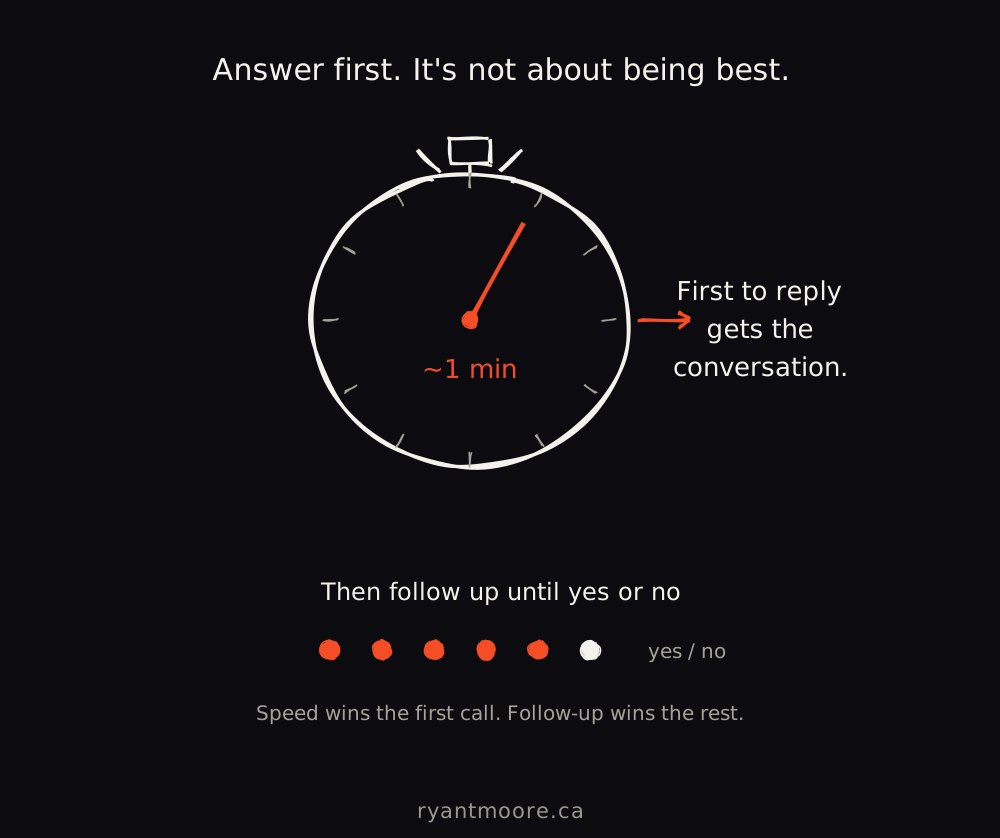
When Richie Colletti talked about his roofing business on The Trade Talks, the part that stuck wasn’t a marketing trick. It was speed. He got a quote in front of a customer within about a minute of them asking, then followed up seven to ten times after. Concrete Designs told the same kind of story about growing fast: quick responses and steady follow-up, wired into Jobber so nothing slipped. Different trades, same unglamorous edge.
Why first beats best on a cold lead
Someone with a leaking roof or a cracked driveway isn’t loyal yet. They filled out three forms. Whoever answers first usually gets the first real conversation, and the conversation is where the job gets decided. By the time the second and third contractors call back, the work’s often already promised.
Being first isn’t a hustle problem. Nobody can watch the inbox at nine on a Saturday night. It’s a coverage problem, and coverage is what software is for.
Follow-up is where the money leaks
Set aside the tidy sales stats and the pattern still holds: most leads never answer the first message, and most businesses stop after it. Not from laziness. Follow-up is the first thing a busy week eats. You meant to circle back Wednesday, Wednesday got away from you, the lead went cold. Repeat that weekly and you can watch real revenue drain out through a gap nobody’s minding.
Follow-up that runs on its own doesn’t have a busy week. It sends the second message on schedule, and the third, and it stops the second the customer replies, books, or says quit. Seven to ten touches only help if they’re spaced sensibly and end the moment someone responds or opts out. Otherwise it’s just noise. You’re not asking a person to remember. You’re asking a system not to forget, and to know when to quit.
The wiring is the actual work
This is the part I care about, because it’s where these things quietly break. Speed to lead isn’t one clever tool. It’s a chain that has to hold: the form fires the quote, the quote reaches the customer, the reply reaches you, the booking lands in your calendar, the job shows up in your books, and nobody retypes anything in the middle.
Every hand-off in that chain is a place it can drop. A lead that falls into an inbox nobody watches. A booking that never hits the calendar. A quote that goes out while the reply gets lost. Getting speed to lead right is mostly getting those hand-offs to hold, every time, so a fast first answer doesn’t get wasted by a slow, leaky follow-through.
Where to start
You don’t need to wire the whole business this week. Take the single worst leak, which for most contractors is the follow-up nobody has time for, and make it run on its own from first message to last. Prove that one link holds. Then add the next.
Being first gets you the conversation. Following up saves the jobs you’d otherwise lose because a busy week ate the reminder. Wire both to run on their own and you get that edge without hiring someone whose only job is to not forget.