Zero employees, a seven-figure bill
A company reportedly reached an eight-figure run rate with nobody on payroll and an agent picking the next move. The number that didn't make the headline was the monthly bill.
Before you hand a job to an agent, do one sum: what the outcome’s worth, minus what the model costs to make it, minus the cost of the ones it botches and the time you spend checking. If that’s not comfortably positive, the agent is a luxury, not a saving.
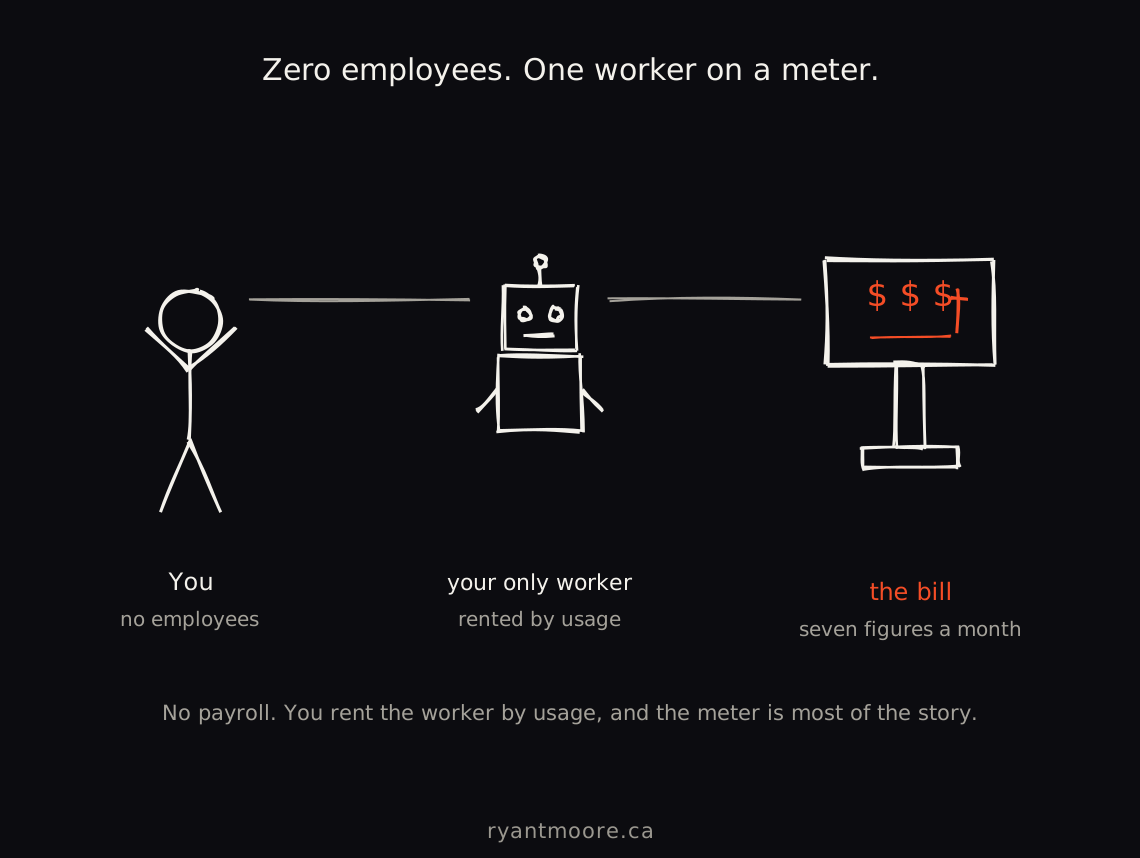
Ben Cera’s company Polsia is the poster child for the zero-employee business. By his own account it hit an eight-figure annual run rate with no staff, run by an agent that wakes up every night and picks the next thing to do.
Here’s the number that didn’t make the headline. In a single month, Polsia’s model bill reportedly ran into seven figures, roughly $1.5 million. Tasks Ben priced at a dollar sometimes cost thirty to fifty in model fees behind the scenes. The work ran while he slept, and it spent real money every time it woke up, enough that in a heavy month the bill can rival the revenue it’s chasing.
So no, this isn’t a machine quietly saving money in the background. It’s a very capable worker you rent by the hour, and the meter is most of the story.
The sum that decides it
Skip the tech and do one piece of arithmetic before you automate anything:
value of the outcome − model cost to produce it − expected cost of errors and review
Comfortably positive? Hand it over. Thin, or you’re not sure? Keep it manual a while longer. Polsia’s whole approach only works while a night of agent decisions is worth more than the night’s bill. For plenty of tasks the value won’t clear the bill, and the only way to know is to price both sides.
Not everything that repeats needs an agent
There’s a cheaper trap here too. A lot of the work people reach for an agent to do doesn’t need one. If a task is the same every time, with clear rules and no judgment, plain automation does it for pennies and never surprises you. Sending a receipt, moving a file, posting a reminder: that’s a scheduled job, not a thinking machine.
Save the agent for work that actually needs a decision. Use dumb, reliable automation for the rest. Paying model fees for something a simple rule could handle is how the bill creeps up with nothing to show for it.
Where the agent earns it
The jobs worth a real agent need judgment and throw off enough value to cover the model cost, the review time, and the guardrails around mistakes. Qualifying a lead and deciding where to send it. Reading a messy support request and deciding whether it can be answered or needs a person. Work where the thinking is worth paying for, and where the payoff covers the model cost and the review step you’ll want around it.
The honest read
The zero-employee business is real, and so’s the knife-edge it runs on. When your biggest bill is the thing doing the work, a good month and a bad month look very different, and “let the agent handle it” stops being free advice.
That’s not a reason to stay away. It’s a reason to do the sum first. The agent’s worth it exactly when the outcome clears the meter, and the whole skill is knowing, task by task, whether it does.